

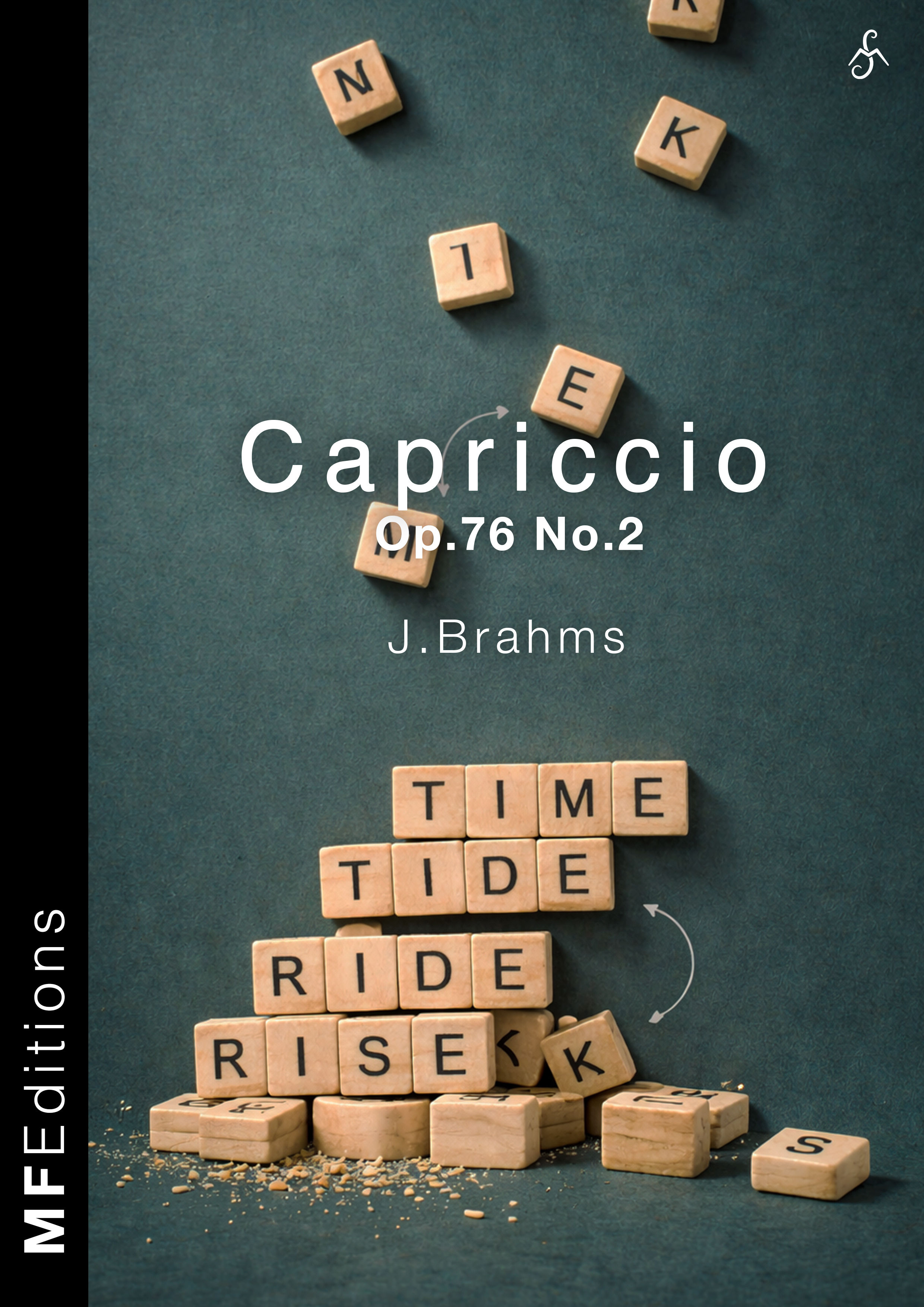

Transcribed by Carlo Marchione. A study in motion — restless, articulated, and constantly evolving. The Capriccio in B minor, Op. 76 No. 2 by Johannes Brahms reveals a different side of Brahms’ piano writing. Unlike the inward character of his late Intermezzi or the lyrical continuity of the Romanze, this piece is driven by movement and shifting direction. The music unfolds through a series of gestures that seem to redirect themselves mid-phrase. Lines emerge, intersect, and evolve, creating a sense of forward motion without settling into a single expressive state. Rhythm plays a central role. The articulation is clear, sometimes almost percussive, yet always controlled. Beneath this surface activity lies a carefully structured design, where contrast is created not through abrupt change, but through the reconfiguration of musical ideas.
This is Brahms in motion — precise, dynamic, and subtly unpredictable. Listen to the original piece: https://www.youtube.com/watch?v=LvGcKbRwH6Q


